Choosing Junior Cycle subjects?
The Junior Cycle report shows which subjects suit your child and why, what the move from primary is likely to be like for them, and how to help without taking over. Use it while you're considering the options your school offers.
For children in 4th, 5th and 6th class.
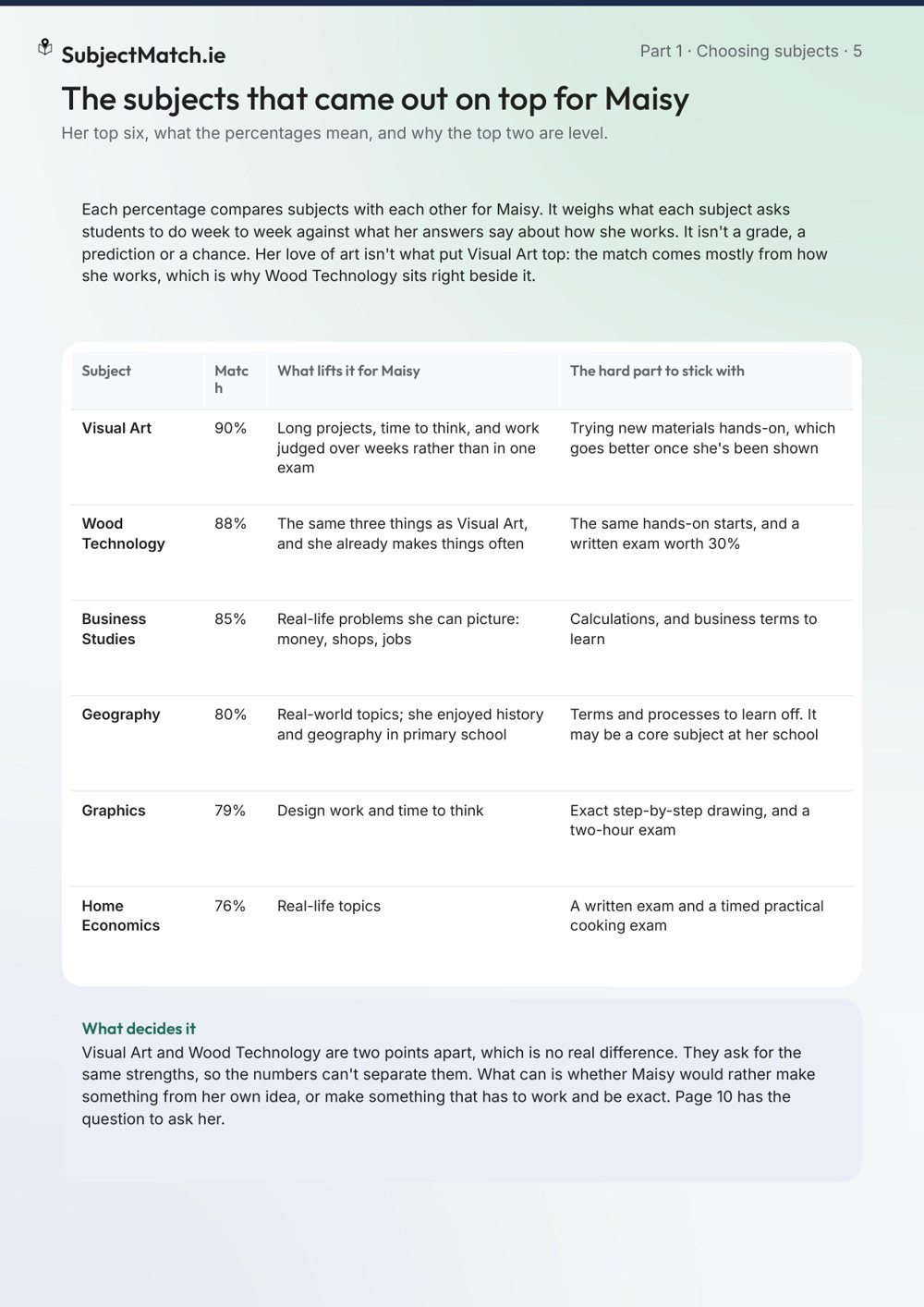
The subjects that came out on top for Maisy
| Subject | What lifts it for Maisy | Match |
|---|---|---|
| Visual Art | Long projects, time to think, and work judged over weeks rather than in one exam | 90% |
| Wood Technology | The same three things as Visual Art, and she already makes things often | 88% |
| Business Studies | Real-life problems she can picture: money, shops, jobs | 85% |
Each percentage compares subjects with each other for Maisy. It isn't a grade, a prediction or a chance.
Inside the Junior Cycle report
36 pages in five parts, written about your child by name. Here's what each part gives you, with real pages from Maisy's report.
Get to know how your child works
The report opens with the three things that stand out most about your child, each backed by several of their answers and with a note on what helps. Most of it you'll recognise. Some of it you may never have put into words.
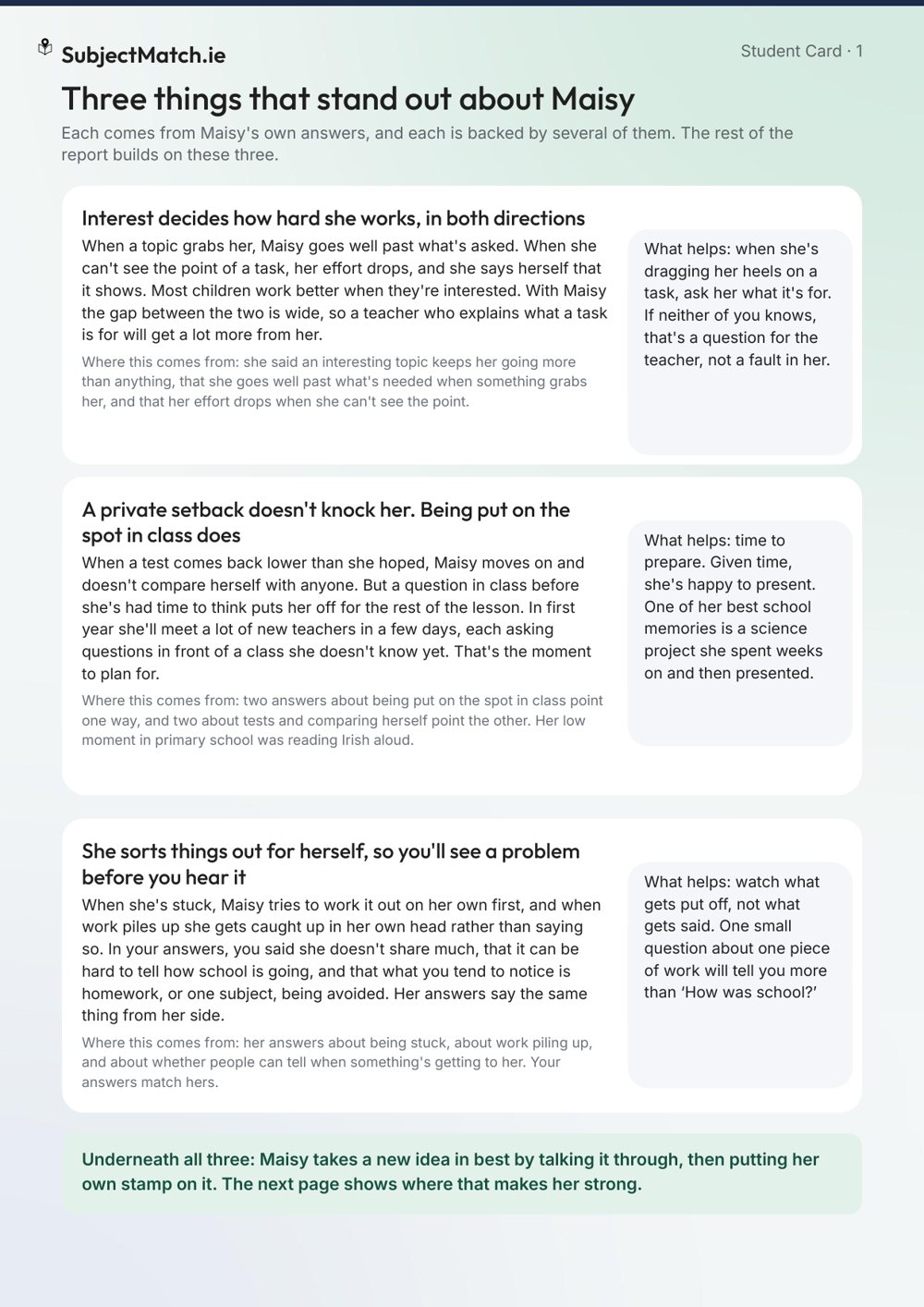
Clear in her answers
A private setback doesn't knock her. Being put on the spot in class does
In first year she'll meet a lot of new teachers in a few days, each asking questions in front of a class she doesn't know yet. That's the moment to plan for.
What helps: time to prepare. Given time, she's happy to present.
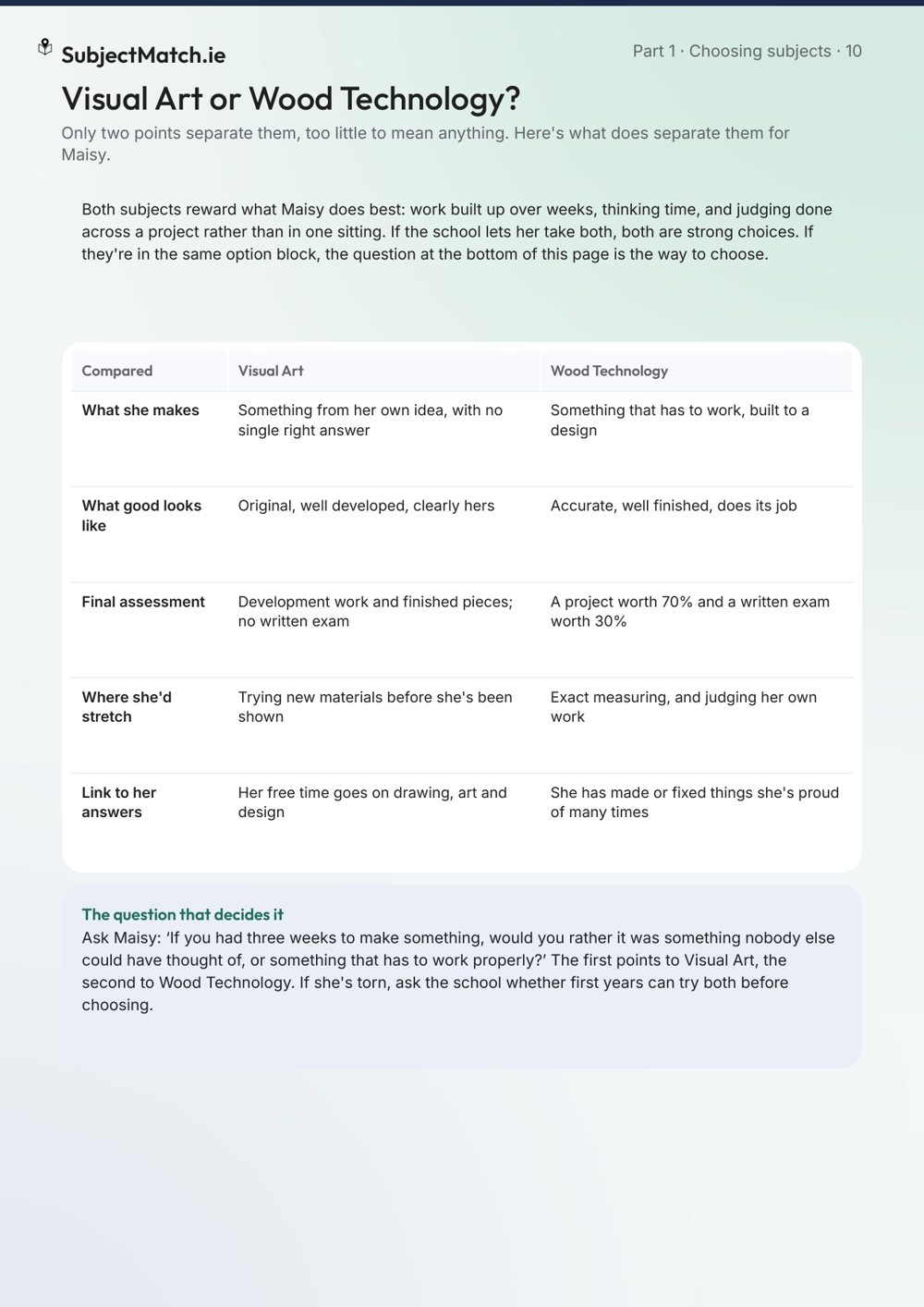
Visual Art or Wood Technology?
Only two points separate them, too little to mean anything.
The question that decides it: ‘If you had three weeks to make something, would you rather it was something nobody else could have thought of, or something that has to work properly?’
Know which subjects to pick, and be able to say why
Their top six subjects, with what lifts each one for your child and the hard part to stick with. When two come out close, you get the one question that separates them. Any subject you ask about gets its own page.
Know what's normal in the first weeks, and when to ring the school
The move from one teacher to ten or more, the longer day and the new routine. For each thing you might notice, the report says what's usually part of settling in and the sign that means it's time to talk to the school.
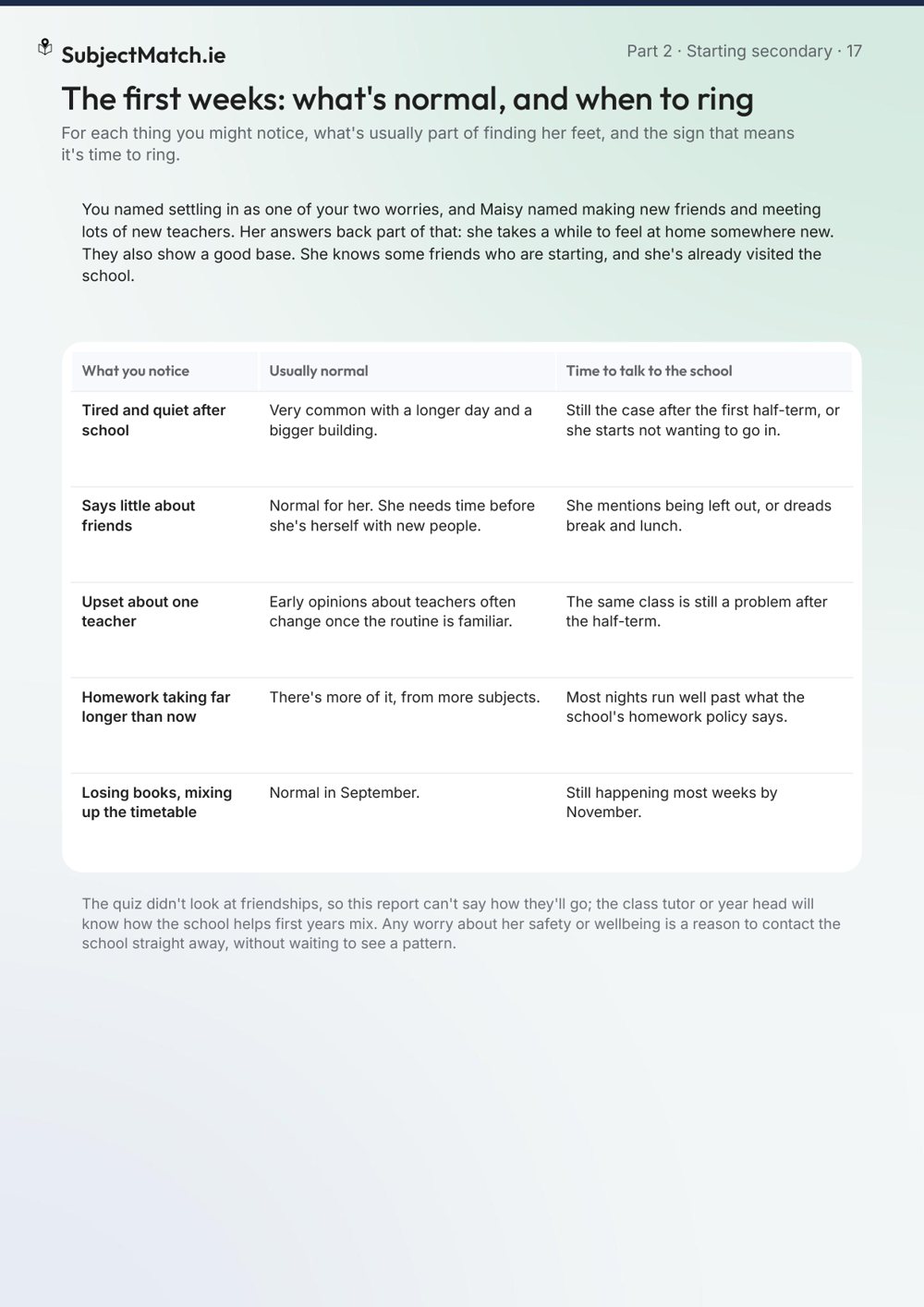
The first weeks: what's normal, and when to ring
| What you notice | Usually normal | Time to talk to the school |
|---|---|---|
| Tired and quiet after school | Very common with a longer day and a bigger building. | Still the case after the first half-term, or she starts not wanting to go in. |
| Losing books, mixing up the timetable | Normal in September. | Still happening most weeks by November. |
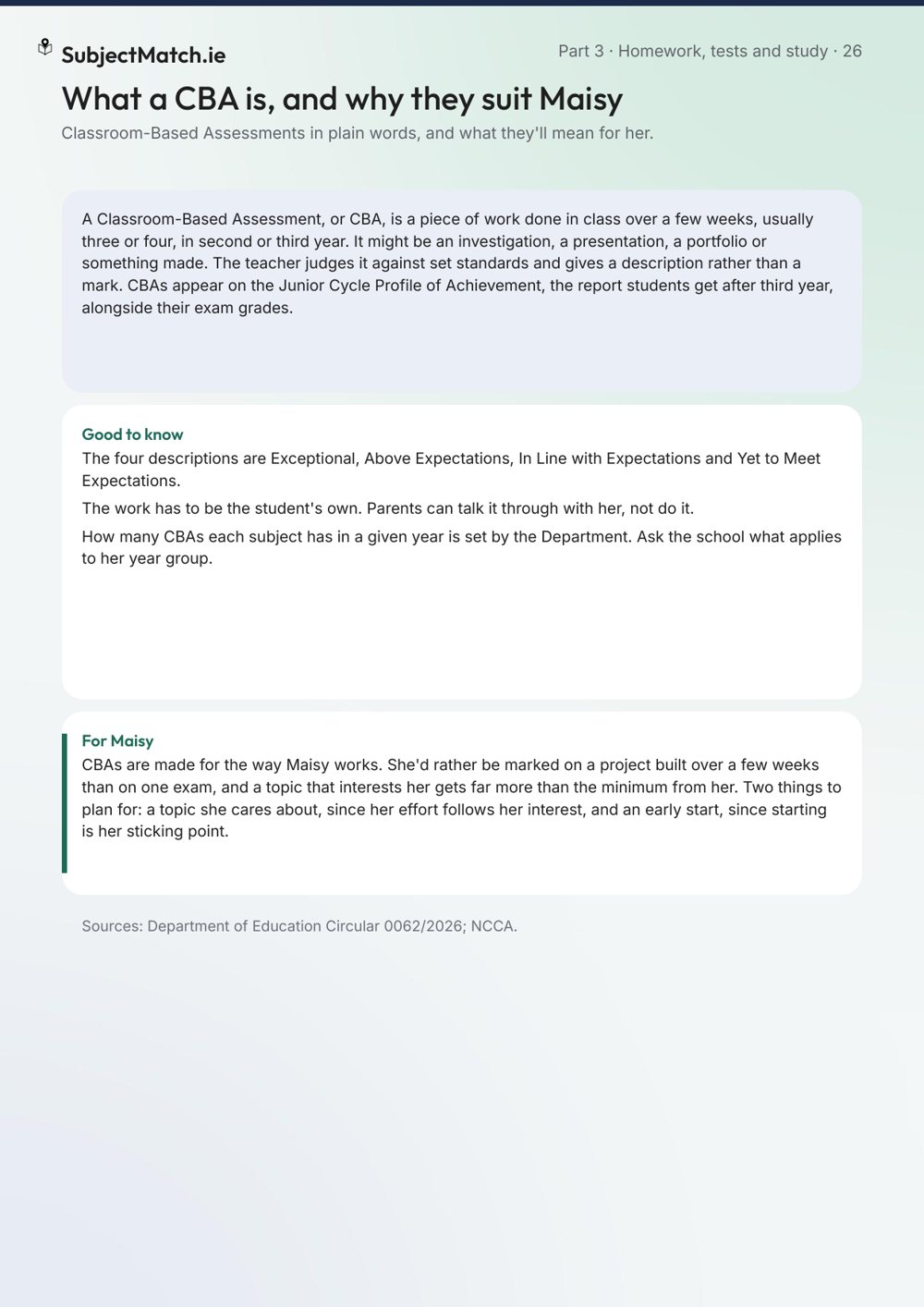
For Maisy
What a CBA is, and why they suit Maisy
CBAs are made for the way Maisy works. She'd rather be marked on a project built over a few weeks than on one exam.
Two things to plan for: a topic she cares about, since her effort follows her interest, and an early start, since starting is her sticking point.
A way to study that suits how they learn
One study method built around how your child takes things in, adjusted for each kind of subject. Plus homework, class tests and CBAs in plain words, and a study week that's realistic for first year.
Help without taking over
The part written for you. What helps most in fifteen minutes on a school night, how to get a real answer about the day, and four questions for the parent-teacher meeting. It ends with one page to stick on the fridge.
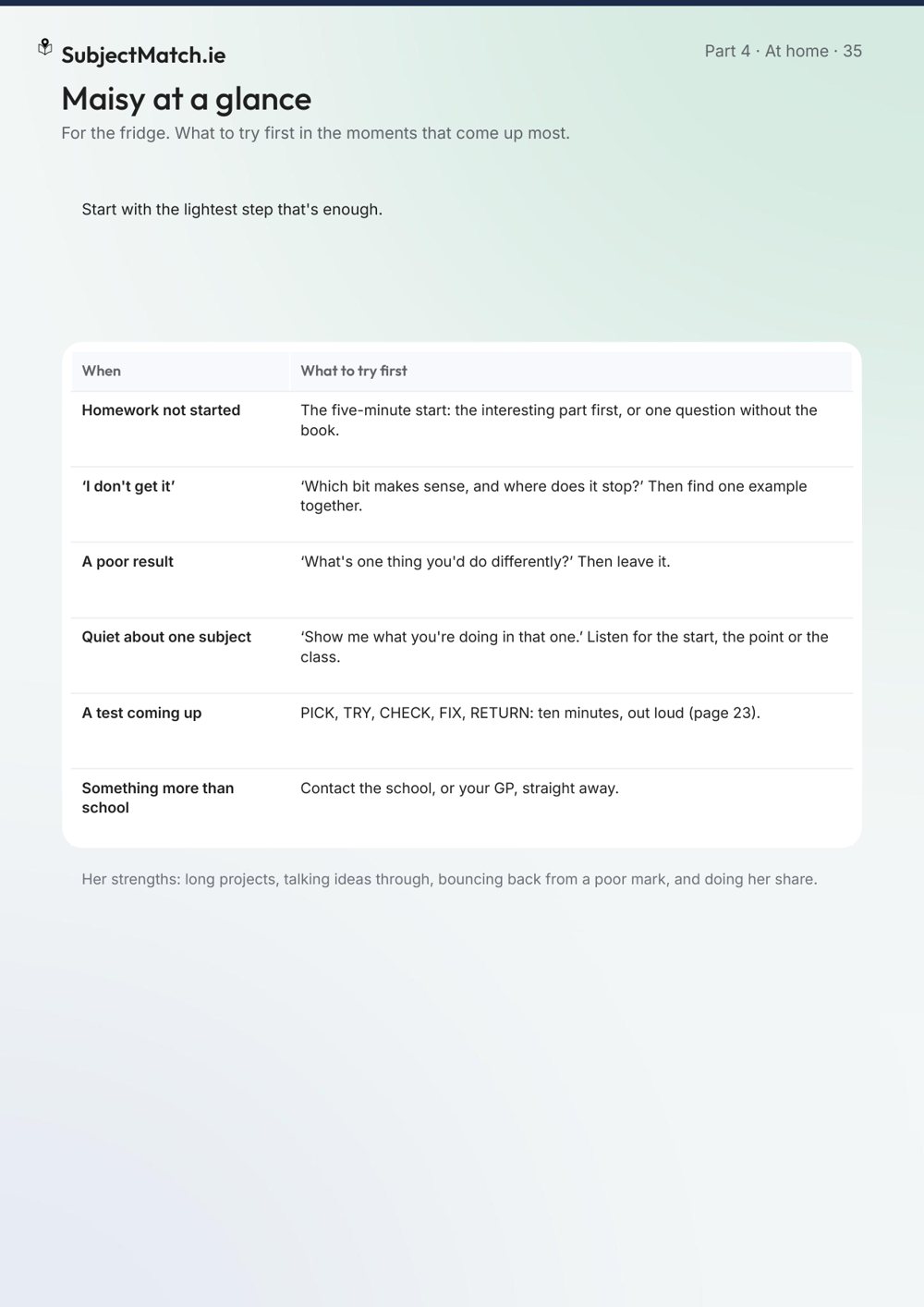
For the fridge
Maisy at a glance
| When | What to try first |
|---|---|
| Homework not started | The five-minute start: the interesting part first, or one question without the book. |
| A poor result | ‘What's one thing you'd do differently?’ Then leave it. |
| Quiet about one subject | ‘Show me what you're doing in that one.’ Listen for the start, the point or the class. |
When to do it
Every school sets its own dates, so check with yours. Earlier gives you longer to use the parts on settling in and study.
- 4th to 6th class
Complete the quiz together. We'll confirm the report's delivery timeframe before payment.
- Open night
Bring Part 1's questions for the school and check its subject list.
- Choices due
Fill in the school's form from your subject plan, with reasons you can explain.
- 1st year
Use Parts 2 to 4 as the year goes on, and keep the fridge page handy.
Junior Cycle questions
Get the Junior Cycle report
€49.99, everything included. You pay once the quiz is done.
Not sure which Junior Cycle subjects to choose?
Start with our free parent guide: compare the actual subject work, ask the school the right questions and make room for your child's interests.
Read the Junior Cycle subject-choice guideNot ready for a report? Use our free 15-minute subject-choice checklist to compare the school's actual options with your child's interests before deciding.